Humidity control is a critical requirement in many industrial environments where moisture can influence materials, equipment, product quality, or process stability. While conventional air-conditioning systems can regulate temperature and general comfort conditions, specialized manufacturing processes may require much lower moisture levels.
A low humidity room is designed to maintain controlled moisture conditions by using specialized dehumidification technology. Such environments are particularly important when manufacturing involves hygroscopic or moisture-sensitive materials that can absorb water vapour from surrounding air.
Bry-Air has more than six decades of experience in dehumidification and environmental control technologies and provides engineered solutions for industries including lithium battery manufacturing, pharmaceuticals, food processing, electronics, and other specialized applications.
What Is the Relationship Between Humidity and Dew Point?
Relative humidity describes the amount of moisture in the air in relation to the maximum amount the air can hold at a particular temperature. Dew point, on the other hand, indicates the temperature at which air reaches saturation.
For highly controlled industrial environments, dew point can be a more useful parameter because it provides an indication of the actual moisture content of the air. Lower dew points correspond to drier air, making dew point control particularly important in applications that require ultra-low moisture conditions.
How Does a Low Humidity Room Maintain Dry Conditions?
Maintaining a very dry environment requires continuous moisture removal. A specialized dehumidification system uses desiccant technology to adsorb water vapour from process air and reduce its moisture content.
The desiccant material captures moisture as air passes through it. The collected moisture is then removed during the regeneration stage, allowing the desiccant to continue operating. This continuous process makes desiccant dehumidification suitable for industrial applications where stable low humidity must be maintained for extended operating periods.
Why Is Desiccant Dehumidification Effective for Low Moisture Applications?
Desiccant systems can achieve significantly lower moisture levels than conventional cooling-based dehumidification alone. This makes them suitable for environments where standard air-conditioning cannot provide the required dew point.
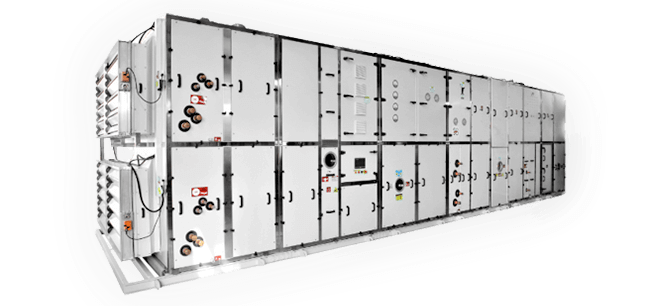
Bry-Air’s Low Dew Point Dehumidifiers are engineered to provide supply air dew points ranging from approximately -40°C to -80°C, depending on configuration and application requirements. The systems are designed for demanding applications involving lithium-ion battery manufacturing and other moisture-sensitive processes.
Which Manufacturing Processes Require Extremely Low Humidity?
The required humidity level depends on the materials, production stages, environmental conditions, and quality requirements of the process. Some industries need only moderate humidity control, while others require carefully engineered dry rooms with extremely low dew points.
Lithium-ion battery manufacturing is one of the most demanding applications because moisture can adversely affect sensitive battery materials and manufacturing processes. Bry-Air identifies dry room dehumidification as a critical component of lithium battery production and recommends controlled dew point conditions for processing areas.
Other applications can include safety glass, automotive hybrid batteries, medical devices, pharmaceutical production, and specialized polymer processing. The appropriate environmental conditions should always be determined according to the specific process rather than applying one humidity target across different industries.
Why Are Moisture-Sensitive Materials Difficult to Process?
Many materials are hygroscopic, meaning they can absorb moisture from surrounding air. When these materials encounter uncontrolled humidity, their physical or chemical properties can change.
In sensitive manufacturing processes, this can affect consistency, handling, processing behaviour, or final product performance. Maintaining a controlled dry environment reduces exposure to unwanted moisture and provides a more stable production atmosphere.
What Is a Low Dew Point Dehumidifier and How Does It Work?
A low dew point dehumidifier is a specialized system designed to remove moisture from air until extremely low dew point conditions are achieved.
Bry-Air’s LDP systems incorporate high-performance desiccant rotor technology and are designed to deliver controlled dry air for applications requiring very low humidity. The company states that its LDP systems can achieve supply air dew points between -40°C and -80°C depending on the application and system configuration.
What Role Does the Desiccant Rotor Play?
The desiccant rotor is central to the moisture removal process. As humid air passes through the rotor, moisture is adsorbed by the desiccant material. A separate regeneration process then removes the collected moisture so the rotor can continue drying incoming air.
Bry-Air highlights its proprietary honeycomb desiccant rotor technology for demanding low dew point applications. The company also manufactures its own rotors and describes them as suitable for environments associated with lithium battery production.
Why Is Room Design Important Alongside Dehumidification?
A dehumidifier alone does not determine the performance of a dry room. Moisture can enter through doors, gaps, ventilation systems, construction joints, ductwork, and other openings.
For this reason, low humidity environments require an integrated approach that combines dehumidification with suitable room construction and airflow management.
Bry-Air’s dry room solutions include features such as vapour-tight construction, insulated modular panels, airlocks, insulated ductwork, dew point sensors, and PLC-based controls.
How Can Air Leakage Affect Moisture Control?
Air leakage can introduce humid ambient air into a controlled environment. The dehumidification system must then remove this additional moisture load, potentially increasing energy requirements and making the target dew point more difficult to maintain.
A properly engineered room envelope helps minimize uncontrolled moisture infiltration. Airlocks and vapour-tight construction can further support stable environmental conditions by limiting the movement of humid air into the controlled space.
How Can Energy Efficiency Be Improved in Low Dew Point Applications?
Maintaining extremely low humidity can require substantial energy, particularly in large industrial dry rooms. Therefore, energy efficiency should be evaluated when selecting and engineering a dehumidification system.
Bry-Air states that its Low Dew Point technology can reduce energy consumption by approximately 30% to 60%, depending on the application and system design. Its technology incorporates features such as Green DryPurge and high-performance desiccant rotors to improve regeneration efficiency.
Why Does System Engineering Affect Energy Consumption?
Energy performance depends on several variables, including airflow, moisture load, fresh air requirements, target dew point, regeneration conditions, room leakage, and operating temperature.
An appropriately sized system can avoid unnecessary energy consumption while still maintaining the required environmental conditions. Engineering the entire dry room rather than selecting a dehumidifier in isolation is therefore important for long-term operational efficiency.
How Does Monitoring Support Stable Humidity Conditions?
Continuous monitoring allows manufacturers to identify changes in environmental conditions and maintain the required operating range. Dew point sensors can provide real-time information about the moisture conditions inside controlled areas.
Bry-Air’s dry room solutions incorporate dew point sensors and PLC-based controls, allowing environmental conditions to be monitored and managed as part of an integrated control system.
What Should Manufacturers Monitor?
Depending on the application, important parameters can include dew point, temperature, airflow, room pressure, fresh air quantity, and equipment operating conditions.
Monitoring these parameters helps operators understand whether the system is functioning within its intended design conditions. Preventive maintenance of filters, sensors, desiccant components, seals, controls, and associated equipment is also important for maintaining consistent performance.
What Should Manufacturers Consider When Designing a Low Humidity Environment?
The first step is to establish the actual process requirements. These can include the required dew point, room temperature, room size, moisture load, production schedule, airflow, fresh air requirements, and acceptable operating range.
The dehumidification system should then be selected according to these parameters. Oversizing or undersizing can create unnecessary costs or make it difficult to achieve stable environmental conditions.
Why Is Application-Specific Engineering Important?
Different manufacturing processes have different moisture loads and environmental requirements. A battery dry room, pharmaceutical production area, and specialized material-processing environment may require completely different system configurations.
Bry-Air describes its LDP systems as customized environmental control systems and provides configurations based on application requirements and target dew points.
Conclusion
A properly engineered low humidity environment can provide the moisture control required for sensitive industrial manufacturing processes. Desiccant-based dehumidification offers a practical approach for applications where conventional humidity control cannot achieve the required moisture levels.
Low dew point systems can support demanding applications by maintaining highly controlled environmental conditions, while room construction, airflow management, sensors, controls, and preventive maintenance all contribute to overall performance.
Bry-Air’s Low Dew Point Dehumidifiers are designed for applications requiring extremely dry air, with systems capable of achieving supply air dew points from approximately -40°C to -80°C depending on configuration and requirements.
Manufacturers planning a new dry room or looking to improve moisture control should evaluate the complete process and environmental requirements before selecting equipment. For application-specific guidance and engineered dehumidification solutions, visit Contact Us.
